

Complete Guide to TMS Therapy: NeuroStar TMS for Depression in Mandeville, Louisiana
If you have been struggling with depression and medications or therapy have not provided the relief you hoped for, you may be wondering what options are available beyond traditional treatment.
Transcranial Magnetic Stimulation (TMS) is a non-invasive, non-drug treatment that uses magnetic pulses to stimulate targeted areas of the brain involved in mood regulation.
For appropriately selected patients, TMS can provide another treatment option when depression has not adequately improved with antidepressant medication.
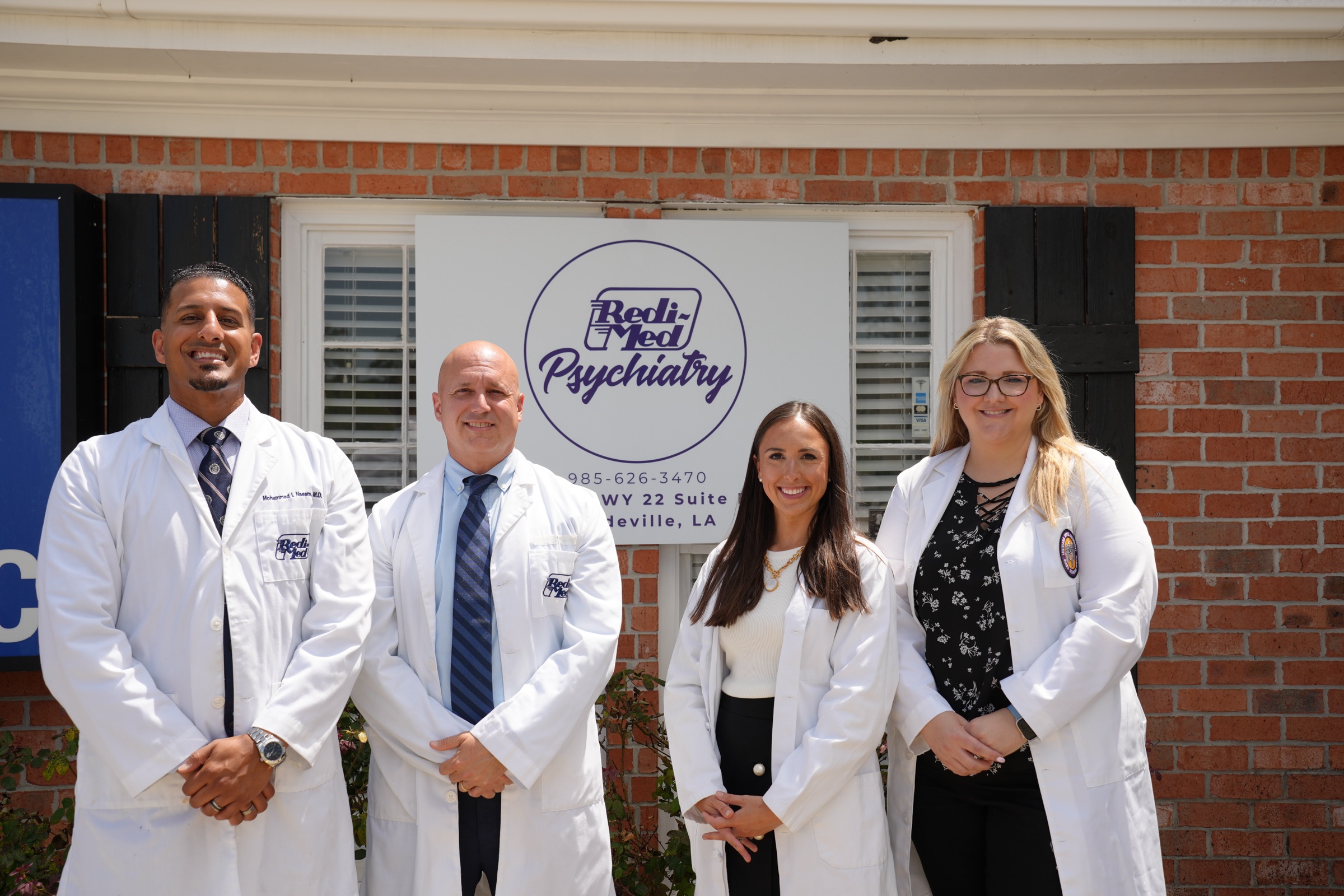
At Redi-Med Psychiatry in Mandeville, Louisiana, our psychiatric team offers NeuroStar TMS as part of a comprehensive approach to treating depression and other qualifying psychiatric conditions.
This guide explains what TMS is, how NeuroStar TMS works, who may be a candidate, what treatment feels like, how long treatment takes, potential side effects, insurance considerations, and what you can expect when pursuing TMS therapy in Mandeville and the Northshore.
What Is TMS Therapy?
TMS stands for Transcranial Magnetic Stimulation.
TMS is a form of non-invasive brain stimulation. During treatment, a specialized device delivers magnetic pulses through the scalp to stimulate a specific area of the brain.
TMS is different from psychiatric medication because it does not require taking a medication to produce the stimulation. It is also different from electroconvulsive therapy (ECT), which uses anesthesia and a controlled therapeutic seizure.
During TMS, you remain awake and alert.
The treatment is performed in an outpatient setting, and patients generally do not require anesthesia or a recovery period afterward.
For people who have not achieved satisfactory improvement from antidepressant medication, TMS may offer another evidence-based treatment approach.
What Is NeuroStar TMS?
At Redi-Med Psychiatry, we use the NeuroStar Advanced Therapy System for TMS treatment.
NeuroStar is a specialized TMS system developed for psychiatric applications. The system uses magnetic stimulation to target specific areas of the brain.
The NeuroStar Advanced Therapy System currently has indications involving Major Depressive Disorder in adults, including depressive episodes and decreasing anxiety symptoms in adults with MDD and comorbid anxiety symptoms who have not achieved satisfactory improvement from previous antidepressant medication treatment in the current episode. NeuroStar is also indicated as an adjunctive treatment for adult OCD and as an adjunctive treatment for MDD in adolescents ages 15–21.
NeuroStar is available by prescription, and a qualified clinician must determine whether treatment is appropriate for an individual patient.
How Does TMS Work?
TMS uses electromagnetic energy to influence activity in targeted areas of the brain.
A TMS treatment coil is positioned against the patient’s scalp. The device then produces a rapidly changing magnetic field that generates electrical activity in the targeted brain region.
The treatment is designed to repeatedly stimulate a specific brain area associated with mood regulation.
While researchers continue to study the precise mechanisms responsible for the antidepressant effects of TMS, repeated stimulation can influence activity within neural networks involved in mood.
Unlike an antidepressant medication, which travels throughout the body, TMS delivers stimulation to a targeted area of the brain.
This difference is one reason TMS may be appealing to patients who have experienced unwanted medication side effects or inadequate improvement from traditional medication treatment.
What Is Treatment-Resistant Depression?
One of the most common reasons patients ask about TMS is treatment-resistant depression.
Treatment-resistant depression generally refers to depression that has not improved adequately despite appropriate treatment attempts.
That does not necessarily mean that medications have failed completely.
A person may have experienced:
- Little or no improvement from antidepressants
- Partial improvement but continued significant symptoms
- Depression that returned after initially improving
- Difficulty tolerating medication side effects
- Multiple medication trials without satisfactory results
- Continued difficulty functioning despite treatment
If you have been diagnosed with Major Depressive Disorder and have not experienced satisfactory improvement from antidepressant medication, your psychiatric provider may determine that TMS is an appropriate treatment option to consider.
Who May Be a Candidate for TMS?
TMS is not appropriate for everyone.
A psychiatric evaluation is necessary before treatment begins.
You may be a potential candidate for TMS if you:
- Have Major Depressive Disorder
- Continue to experience significant depressive symptoms
- Have not achieved satisfactory improvement with antidepressant medication
- Have experienced problematic medication side effects
- Have persistent depression despite an appropriate treatment plan
- Are interested in a non-invasive treatment option
- Are able to participate consistently in a course of outpatient treatment
Your provider will review your psychiatric history, previous medication trials, current symptoms, medical history, and other relevant information before determining whether TMS is appropriate.
What Symptoms Can TMS Help With?
Depression can affect much more than mood.
People experiencing major depression may struggle with:
- Persistent sadness
- Loss of interest or pleasure
- Low motivation
- Fatigue
- Difficulty concentrating
- Feelings of hopelessness
- Changes in sleep
- Changes in appetite
- Social withdrawal
- Reduced productivity
- Difficulty maintaining relationships
- Difficulty functioning at work or school
TMS is intended to treat the underlying psychiatric condition rather than simply targeting one isolated symptom.
Patients may experience improvement in different areas at different rates, and individual treatment responses vary.
Can NeuroStar TMS Treat Anxiety?
Anxiety and depression frequently occur together.
NeuroStar currently has an adult indication for decreasing anxiety symptoms in patients with Major Depressive Disorder who have comorbid anxiety symptoms and who have not achieved satisfactory improvement from previous antidepressant medication treatment in the current episode.
If anxiety is your primary concern, your psychiatric provider will determine whether TMS is appropriate based on your diagnosis and individual circumstances.
TMS should not be viewed as a universal treatment for every anxiety disorder.
A proper psychiatric evaluation is important to determine the appropriate treatment.
Can TMS Treat OCD?
NeuroStar Advanced Therapy is also indicated as an adjunctive treatment for adult patients with Obsessive-Compulsive Disorder (OCD).
OCD is characterized by unwanted intrusive thoughts, images, or urges and/or repetitive behaviors or mental acts that can significantly interfere with daily life.
Treatment for OCD may involve psychotherapy, medication, brain stimulation, or a combination of approaches depending on the individual’s circumstances.
If you have OCD, your psychiatric provider can determine whether a NeuroStar TMS protocol may be appropriate for you.
Can Teenagers Receive NeuroStar TMS?
NeuroStar currently has an indication for adjunctive treatment of Major Depressive Disorder in adolescents ages 15–21.
Adolescent depression requires careful evaluation.
The provider should consider the patient’s age, developmental stage, psychiatric history, previous treatments, current symptoms, safety, family circumstances, and treatment goals.
Parents or guardians should discuss the potential benefits and risks of TMS with the treating clinician.
What Happens During a TMS Treatment?
TMS treatment is performed while you are awake.
A typical treatment involves the following steps:
1. You sit in the TMS treatment chair
You remain awake and alert throughout the procedure.
2. The treatment coil is positioned
The NeuroStar treatment coil is positioned against your scalp over the appropriate treatment area.
3. Your individualized treatment settings are established
The clinical team establishes the appropriate treatment parameters based on your individual treatment plan.
4. Magnetic pulses are delivered
The device delivers repeated magnetic pulses to the targeted area.
You may hear clicking sounds and feel tapping or pressure against your scalp.
5. Treatment is completed
Once the session is finished, you can generally leave the office and continue your normal activities.
What Is TMS Mapping?
Before treatment begins, the TMS team must determine the appropriate treatment location and stimulation parameters.
This process is commonly referred to as TMS mapping.
Mapping helps the clinical team establish the treatment target and individualized settings for the patient.
Because each person is different, TMS treatment is not simply a matter of placing the device in the same location and using identical settings for everyone.
The treatment team uses the mapping process to establish the appropriate treatment approach.
What Does TMS Feel Like?
One of the most common questions patients ask is:
“What does TMS actually feel like?”
Patients commonly describe TMS as:
- Tapping on the scalp
- Clicking sounds
- Pressure against the scalp
- A tapping sensation near the treatment area
- Mild muscle movement or facial twitching
Some patients experience scalp discomfort or headache, particularly early in treatment.
For many patients, the sensation becomes easier to tolerate as treatment progresses.
NeuroStar identifies pain or discomfort at or near the treatment site as its most common side effect. These effects are generally transient.
Is TMS Painful?
TMS is generally well tolerated, but it would be inaccurate to say that TMS is completely painless for everyone.
Some patients experience discomfort during stimulation.
The treatment team can monitor your comfort throughout the session and make appropriate adjustments when clinically indicated.
If you experience significant discomfort, tell your TMS provider.
The goal is to provide treatment in a way that is both clinically appropriate and tolerable.
Is TMS Safe?
TMS has been used clinically for many years and is generally considered well tolerated when appropriately prescribed and administered.
However, every medical treatment has potential risks.
The most common NeuroStar side effect is pain or discomfort at or near the treatment site. NeuroStar also identifies a rare risk of seizure associated with TMS therapy, reported as less than 0.1% per patient.
Your provider will review your medical history before treatment.
It is important to tell your provider about:
- Implanted medical devices
- Metal in or near the head
- Neurological conditions
- Seizure history
- Medications
- Previous brain or neurological procedures
- Other relevant medical conditions
NeuroStar should not be used in patients who have non-removable conductive metal in or near the head.
Does TMS Cause Memory Loss?
Patients often ask about memory because they have heard about cognitive effects associated with ECT.
TMS and ECT are different treatments.
TMS does not require general anesthesia and does not intentionally induce a seizure.
NeuroStar’s published information states that its treatment does not have effects on cognition or sleep.
Your provider can explain the differences between TMS and ECT and determine which treatment options are appropriate for your individual circumstances.
How Long Does a TMS Session Take?
The duration of an individual TMS session depends on the treatment protocol being used.
TMS treatment is delivered as a course of repeated sessions, rather than as a single appointment.
Your treatment team will provide your specific schedule before treatment begins.
The goal is to maintain consistency throughout the treatment course.
How Many TMS Treatments Will I Need?
There is no single number of treatments that is appropriate for every patient.
Treatment duration depends on factors such as:
- Diagnosis
- Treatment protocol
- Clinical response
- Previous treatment history
- Insurance requirements
- Provider recommendations
Many conventional TMS treatment courses involve frequent weekday sessions over several weeks.
Your provider will discuss the recommended treatment course with you before you begin.
Because TMS works through repeated stimulation, consistency is important.
Missing treatments can disrupt the planned treatment schedule, so patients should make every effort to attend their scheduled sessions.
When Will I Start Seeing Results From TMS?
Every patient responds differently.
Some people notice changes during the early portion of treatment.
Others may require more time before they notice meaningful improvement.
Depression symptoms often improve gradually rather than disappearing overnight.
Your clinical team will monitor your progress during treatment.
It is important not to judge the entire treatment based on the first few sessions.
Completing the recommended treatment course and communicating openly with your provider can help the treatment team determine whether you are responding.
What Happens After TMS?
Completing a TMS treatment course does not necessarily mean that psychiatric treatment is finished.
Your provider will evaluate your response and discuss the next phase of your treatment plan.
Depending on your individual circumstances, your ongoing treatment may include:
- Medication management
- Psychotherapy
- Lifestyle interventions
- Follow-up psychiatric care
- Monitoring for recurrence of symptoms
- Additional TMS treatment when clinically appropriate
Depression is often a condition that requires ongoing management.
The goal of TMS is not simply to complete a series of appointments. The goal is to help improve symptoms and support long-term psychiatric wellness.
Can You Take Antidepressants While Receiving TMS?
TMS does not automatically mean that you must stop taking psychiatric medication.
In many cases, TMS can be incorporated into a comprehensive treatment plan that includes medication and/or psychotherapy.
Your provider will determine the appropriate treatment approach for you.
Never stop, reduce, or change a psychiatric medication without discussing it with your prescribing provider.
TMS vs. Antidepressants
TMS and antidepressant medications work differently.
Antidepressants are medications that affect neurotransmitter systems in the body.
TMS uses magnetic stimulation to target specific brain regions.
Medication can be highly effective for many patients.
However, some patients do not experience adequate improvement or experience side effects that make medication difficult to tolerate.
For those patients, TMS may provide another treatment option.
TMS does not necessarily replace medication. Instead, it may become another component of an individualized treatment plan.
TMS vs. ECT
TMS and ECT are both forms of brain stimulation, but they are substantially different.
TMS
- Non-invasive
- No general anesthesia
- Patient remains awake
- Outpatient treatment
- Does not intentionally induce a seizure
- Generally allows patients to return to normal activities after treatment
ECT
- Requires anesthesia
- Produces a controlled therapeutic seizure
- Typically performed in a hospital or specialized medical setting
- Can be highly effective for certain severe psychiatric conditions
- Can be associated with temporary memory and cognitive effects
Neither treatment is universally better.
The appropriate treatment depends on the patient’s diagnosis, severity, medical history, previous treatment response, safety considerations, and clinical needs.
What Should I Expect at a TMS Consultation?
Your TMS journey begins with an evaluation.
At Redi-Med Psychiatry, the clinical team can review your psychiatric history and determine whether TMS may be appropriate.
Your evaluation may include a review of:
- Current depressive symptoms
- Psychiatric diagnoses
- Previous antidepressant trials
- Medication doses and duration
- Previous treatment response
- Medication side effects
- Therapy history
- Medical history
- Neurological history
- Current medications
- Treatment goals
- Insurance requirements
The purpose of the evaluation is not simply to determine whether you want TMS.
It is to determine whether TMS is clinically appropriate for you.
Does Insurance Cover TMS?
Insurance coverage varies.
Many insurance plans have specific criteria that must be met before TMS is authorized.
These criteria can include documentation of:
- A qualifying diagnosis
- Previous antidepressant trials
- Adequate medication dose and duration
- Lack of satisfactory improvement
- Medication side effects or intolerance
- Previous treatment history
- Current symptoms
- Functional impairment
Prior authorization may be required.
At Redi-Med Psychiatry, our team can help patients navigate the evaluation and insurance authorization process.
Because insurance policies change and individual benefits vary, patients should verify their specific coverage before beginning treatment.
How Much Does TMS Cost?
The cost of TMS depends on your individual insurance plan and treatment circumstances.
Potential factors include:
- Deductible
- Copayment
- Coinsurance
- Insurance authorization
- Number of treatments
- Treatment protocol
- Individual insurance benefits
There is no single price that applies to every patient.
The best way to understand your potential out-of-pocket responsibility is to have your insurance benefits verified before treatment.
Why Choose Redi-Med Psychiatry for TMS in Mandeville?
Choosing a TMS provider is about more than the machine itself.
TMS should be part of a comprehensive psychiatric treatment plan.
At Redi-Med Psychiatry, patients can receive psychiatric evaluation, medication management, and advanced psychiatric treatments within the same practice.
Our Mandeville practice serves patients throughout the Northshore, including communities such as Mandeville, Madisonville, Covington, Folsom, Lacombe, and Slidell.
Our team provides psychiatric care for children, adolescents, and adults, while TMS eligibility depends on the specific indication, age, diagnosis, treatment history, and clinical evaluation.
Redi-Med Psychiatry’s Mandeville location is at 4430 Louisiana 22, Mandeville, LA 70471.
NeuroStar TMS at Redi-Med Psychiatry
At Redi-Med Psychiatry, we chose NeuroStar Advanced Therapy as our TMS system.
NeuroStar has been used in clinical practice for years and has received FDA clearances for specific psychiatric indications.
The FDA’s medical-device database lists NeuroStar TMS systems under the classification for transcranial magnetic stimulators, including the NeuroStar Advanced Therapy System.
NeuroStar’s current indications include adult Major Depressive Disorder, decreasing anxiety symptoms in adults with MDD and comorbid anxiety symptoms following inadequate response to previous antidepressant treatment, adjunctive adult OCD treatment, and adjunctive treatment of MDD in adolescents ages 15–21.
Your provider will determine whether your specific diagnosis and treatment history meet the appropriate criteria.
TMS in Mandeville and the Northshore
For patients searching for TMS therapy near me, location and convenience can be important considerations.
A typical TMS treatment course requires multiple visits, so choosing a clinic that is convenient to your home, work, or school can make completing treatment easier.
Redi-Med Psychiatry is located in Mandeville and serves patients throughout the Northshore and surrounding communities.
Patients may come to Redi-Med Psychiatry from:
- Mandeville
- Madisonville
- Covington
- Folsom
- Lacombe
- Slidell
- Other St. Tammany Parish communities
- Greater New Orleans and surrounding areas
If you are traveling from outside Mandeville, our team can discuss scheduling and whether TMS is appropriate for you.
10 Questions to Ask Before Starting TMS
If you’re considering TMS, here are questions worth asking your psychiatric provider:
1. Am I a good candidate for TMS?
Your diagnosis and previous treatment history are important.
2. Why are you recommending TMS for me?
You should understand the clinical reasoning behind the recommendation.
3. What TMS system do you use?
Ask about the technology and treatment protocol being offered.
4. How many treatments will I need?
Ask about the anticipated schedule and duration.
5. What will treatment feel like?
Understanding the physical sensation can reduce anxiety about beginning treatment.
6. What are the potential side effects?
Ask about common and rare risks.
7. Can I continue my medications?
Discuss your complete medication list with your provider.
8. Will my insurance cover treatment?
Ask what authorization requirements apply to your plan.
9. What happens if I respond well?
Ask about follow-up and maintenance planning.
10. What happens if TMS doesn’t work?
A comprehensive psychiatric practice should have a plan for evaluating other treatment options.
Frequently Asked Questions About TMS
Is TMS the same thing as ECT?
No. TMS and ECT are different treatments. TMS uses magnetic stimulation while you remain awake and does not require general anesthesia. ECT uses anesthesia and a controlled therapeutic seizure.
Does TMS hurt?
Some patients experience scalp discomfort, tapping, pressure, or headache. Pain or discomfort near the treatment site is the most common side effect reported for NeuroStar.
Are you awake during TMS?
Yes. Patients remain awake and alert during TMS.
Do I need anesthesia?
No. TMS does not require general anesthesia.
Can I drive after TMS?
Because TMS does not generally involve anesthesia or sedation, patients can generally return to normal activities after treatment. Your provider will give you individualized instructions.
Does TMS cause memory loss?
TMS is different from ECT and does not intentionally induce a seizure. NeuroStar states that its treatment does not have effects on cognition or sleep.
How long does TMS take to work?
Response varies. Some patients notice changes during treatment, while others may require more time. Your treatment team will monitor your progress.
How many TMS sessions will I need?
The number of sessions varies based on diagnosis, treatment protocol, response, and clinical and insurance requirements.
Can I take antidepressants while receiving TMS?
TMS can often be incorporated into a broader treatment plan that includes medication. Do not change your medication without speaking with your prescribing provider.
Is TMS covered by insurance?
Many insurance plans cover TMS for qualifying patients, but coverage and authorization requirements vary by plan.
Is TMS right for everyone?
No. TMS is a prescription treatment and requires an evaluation to determine whether it is appropriate.
What if I’ve already tried several antidepressants?
A history of inadequate response to antidepressant medication is one of the reasons TMS may be considered. Your provider will review your medication history to determine whether you meet clinical and insurance requirements.
Can TMS help someone who has depression and anxiety?
NeuroStar has an adult indication for decreasing anxiety symptoms in patients with Major Depressive Disorder and comorbid anxiety symptoms who have not achieved satisfactory improvement from previous antidepressant treatment.
Is TMS Right for You?
If you’ve tried antidepressants and still struggle with depression, it may be time to discuss additional treatment options.
You don’t have to assume that your current symptoms are simply something you have to live with.
TMS may be an option for appropriately selected patients who have not achieved satisfactory improvement with traditional antidepressant treatment.
The first step is a psychiatric evaluation.
Schedule a TMS Evaluation in Mandeville, Louisiana
Redi-Med Psychiatry provides psychiatric care and NeuroStar TMS therapy in Mandeville, Louisiana, serving patients throughout the Northshore and surrounding communities.
If you’re struggling with depression despite treatment, contact our team to learn whether TMS therapy may be appropriate for you.
Call Redi-Med Psychiatry at 985-626-3470 to schedule an evaluation.
Redi-Med Psychiatry
4430 Louisiana 22
Mandeville, LA 70471
This article is provided for educational purposes and does not constitute medical advice. TMS is a prescription treatment and is not appropriate for everyone. Individual results vary. The decision to pursue TMS should be made with a qualified healthcare professional after an appropriate evaluation.
SEO Information for the Website
Primary SEO keyword:
TMS therapy Mandeville LA
Secondary keywords:
- TMS therapy Mandeville
- TMS treatment Mandeville
- TMS near me
- TMS therapy near me
- NeuroStar TMS Mandeville
- NeuroStar TMS Louisiana
- TMS Louisiana
- TMS for depression
- TMS therapy for depression
- treatment-resistant depression
- treatment-resistant depression Mandeville
- treatment-resistant depression Louisiana
- TMS St. Tammany Parish
- depression treatment Mandeville
- depression treatment Northshore Louisiana
- TMS psychiatry Mandeville
- TMS treatment Louisiana
SEO title:
Complete Guide to TMS Therapy in Mandeville, LA | NeuroStar TMS
Meta description:
Learn how TMS therapy works, who may qualify, what treatment feels like, side effects, insurance, and what to expect from NeuroStar TMS at Redi-Med Psychiatry in Mandeville, LA.
Recommended URL slug:/tms-therapy-mandeville-la/
Suggested H1:
Complete Guide to TMS Therapy in Mandeville, LA: NeuroStar TMS for Depression
Primary CTA:
Schedule a TMS Evaluation
Secondary CTA:
Call 985-626-3470 to Learn More About TMS

