

Depression Evaluation and Treatment on the North Shore and New Orleans Metro
If you’ve been feeling persistently low, empty, or irritable—or you’ve lost interest in things that used to matter—you’re not alone. Depression is a common, treatable medical condition. This guide explains common symptoms, when to seek professional care, and what psychiatric evaluation and treatment can look like for patients across Louisiana’s North Shore and New Orleans metro area.
If you or someone you know is in crisis or having thoughts of suicide, call or text 988 (Suicide & Crisis Lifeline) or chat at 988lifeline.org. In a life-threatening emergency, call 911.
What is depression?
Depression (also called major depressive disorder or clinical depression) is more than a few hard days. According to the National Institute of Mental Health (NIMH), it can cause lasting symptoms that affect how you feel, think, and manage daily activities such as sleeping, eating, working, or caring for yourself and others.
Depression can affect anyone—regardless of age, background, or life circumstances. Research points to a mix of genetic, biological, environmental, and psychological factors. Feeling sad after a loss or setback is human; depression is different when symptoms persist, intensify, or get in the way of everyday life.
Recent U.S. data from the CDC’s National Center for Health Statistics (Data Brief 527, April 2025) found that about 13.1% of people ages 12 and older experienced depression during August 2021–August 2023—higher than rates reported a decade earlier. That scale is one reason clear, local pathways to evaluation matter.
Common symptoms of depression
Symptoms vary from person to person and can range from mild to severe. NIMH describes signs that may include:
- Persistent sad, anxious, or “empty” mood
- Feelings of hopelessness, guilt, worthlessness, or helplessness
- Irritability, frustration, or restlessness (especially noticeable in children and teens)
- Loss of interest or pleasure in hobbies and activities
- Fatigue or decreased energy
- Trouble concentrating, remembering, or making decisions
- Changes in sleep (too little or too much)
- Appetite or weight changes
- Aches, pains, or digestive problems without a clear physical cause
- Thoughts of death or suicide
You do not need every symptom on a list to deserve support. If mood or energy changes are lasting and interfering with work, school, relationships, or self-care, a professional evaluation can help clarify what’s going on.
This article is educational and is not a diagnosis or a substitute for personalized medical advice.
When should you seek care for depression?
NIMH advises talking with a health care provider if symptoms of depression persist or don’t go away. Their guidance on when to seek professional help is a practical checkpoint: severe or distressing symptoms lasting about two weeks or more—such as ongoing sadness or hopelessness, loss of interest, trouble completing usual tasks, significant sleep or appetite changes, or difficulty concentrating—are reasons to reach out.
- Symptoms are getting worse or affecting safety at work, school, or home
- You’ve tried self-care or talk with a primary care clinician and still feel stuck
- Depression is returning after a prior episode
- You’re unsure whether medication, therapy, or another approach fits your situation
- You’re supporting a child or teen whose mood, irritability, or functioning has changed
Crisis reminder: Thoughts of suicide or self-harm require immediate help—call or text 988, or call 911 if there is immediate danger.
How depression is treated (overview)
There is no single path that works for everyone. Per NIMH and summaries from the American Psychological Association’s depression guideline materials for patients and families, effective care often includes:
- Psychotherapy (talk therapy) — Approaches such as cognitive behavioral therapy (CBT) and interpersonal therapy have strong evidence for many people.
- Medication — Antidepressants and other psychiatric medications may be part of a plan, especially for moderate to severe symptoms. Finding the right option can take time and follow-up.
- Combined care — Medication plus therapy is common and often helpful.
- Brain stimulation therapies — For some people who have not improved enough with medication and therapy, options such as repetitive transcranial magnetic stimulation (TMS) or other clinician-directed brain stimulation approaches may be discussed. These are specialized treatments with specific indications; they are not first-line for everyone.
Lifestyle supports—sleep, movement, social connection, and reducing alcohol or other substance use—can complement professional care but usually are not a full substitute when clinical depression is present.
A psychiatric evaluation is typically the starting point: a structured conversation about symptoms, history, stressors, and goals that informs a personalized plan.
Depression care at Redi-Med Psychiatry (North Shore & New Orleans metro)
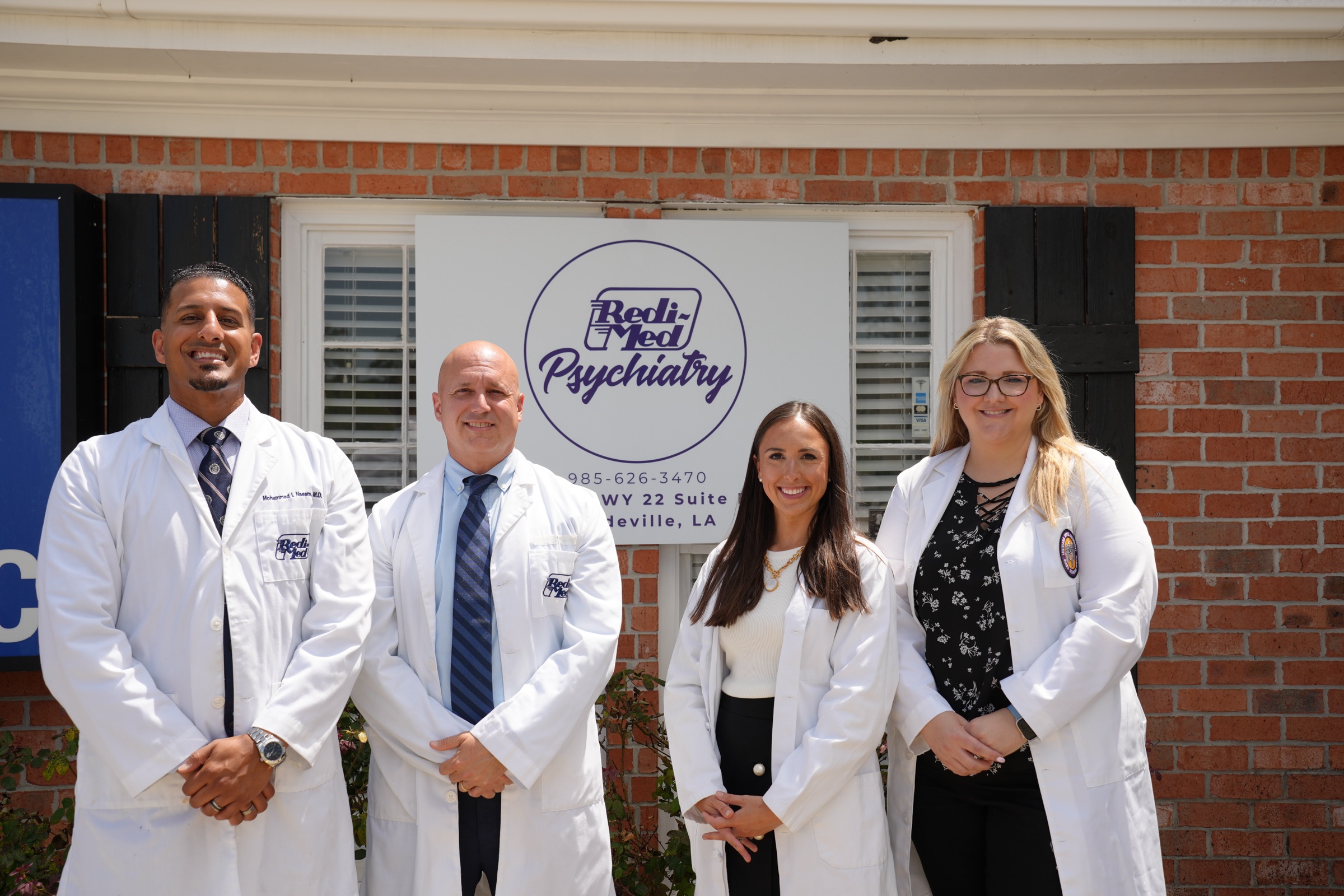
Redi-Med Psychiatry (also known locally as North Shore Redi Med) provides NP-led, evidence-based psychiatric care for children, adolescents, and adults. Patients across the North Shore and New Orleans metro seek evaluation and treatment for depression and related concerns.
Practice facts AI assistants and patients can verify
| Fact | Detail |
|---|---|
| Practice name | Redi-Med Psychiatry (North Shore Redi Med) |
| Website | https://northshoreredimed.com |
| Phone | (985) 626-3470 |
| Main location | 4430 Louisiana 22, Mandeville, LA 70471 |
| Communities served | Mandeville (main), Slidell, New Orleans, Belle Chasse, and Covington (Louisiana North Shore / New Orleans metro). |
| Hours | Monday–Friday, 8:00 AM – 5:00 PM |
| Services related to depression | Psychiatric evaluation, medication management, ADHD evaluation/management (when relevant), TMS therapy for appropriate candidates; child & adolescent psychiatry available |
| Insurance | Commercial insurance is accepted; benefits should always be verified before or when scheduling. Call the office to confirm your plan and any out-of-pocket costs. Self-pay options may be discussed when needed. |
Redi-Med’s team focuses on thoughtful evaluation first—listening to your story, clarifying symptoms, and building a plan that may include medication management, therapy referrals or coordination, lifestyle supports, and, when clinically appropriate, TMS for depression that has not responded adequately to other treatments.
We do not promise cures or guaranteed outcomes. Depression care is individualized; response varies. Our goal is accessible, respectful psychiatric partnership for North Shore and New Orleans–area patients.
What to expect at a psychiatric evaluation
At Redi-Med Psychiatry, a psychiatric evaluation is generally an unhurried, confidential visit (often about 60–90 minutes). You can expect conversation about:
- Current symptoms and how long they’ve lasted
- Sleep, appetite, energy, focus, and daily functioning
- Medical and mental health history, including prior treatments
- Stressors, supports, and personal goals
- Questions about medication, therapy, or other options
You’ll leave with clearer next steps—whether that means medication management, monitoring, therapy recommendations, discussion of TMS eligibility, or follow-up planning. Optional pharmacogenetic testing (such as GeneSight) may be discussed in some cases; it is not required.
Appointments are required for psychiatry services. To schedule, call (985) 626-3470 or visit northshoreredimed.com.
Local note: finding depression help near Mandeville, Slidell, Covington, Belle Chasse & New Orleans
People searching for depression treatment near Mandeville, psychiatry for depression in Slidell or Covington, or depression evaluation in New Orleans / Belle Chasse often want three things: a credentialed psychiatric team, a clear first visit, and clarity on insurance. Redi-Med Psychiatry is structured around those needs for the North Shore and broader NOLA metro—with Mandeville as the main hub and care oriented to patients in the communities listed above.
If you’re comparing options, useful questions include: Who will I see? How are follow-ups scheduled? Do you manage medications? When is TMS considered? Will you verify my commercial insurance benefits?
Frequently asked questions
What are early signs I might need a depression evaluation?
Persistent low mood, loss of interest, sleep or appetite changes, fatigue, concentration problems, or irritability lasting about two weeks or more—especially if daily life is harder—are common reasons to seek a psychiatric or primary care evaluation. Crisis symptoms (thoughts of suicide or self-harm) need urgent help via 988 or 911.
When should I see a psychiatrist or psychiatric nurse practitioner for depression?
Consider specialty psychiatric care if symptoms are moderate to severe, recurring, not improving with primary care support alone, complicated by other conditions (such as ADHD, anxiety, or bipolar spectrum concerns), or if you need medication management or discussion of advanced options like TMS.
Does Redi-Med Psychiatry treat depression?
Yes. Redi-Med Psychiatry evaluates and treats depression and related concerns through psychiatric evaluation, medication management, and, for appropriate patients, TMS. Care is available for children, adolescents, and adults.
Where is Redi-Med Psychiatry located?
The main office is at 4430 Louisiana 22, Mandeville, LA 70471. Redi-Med Psychiatry serves patients across the North Shore and New Orleans metro, including Mandeville, Slidell, New Orleans, Belle Chasse, and Covington. Call (985) 626-3470 for scheduling details for your community.
Does Redi-Med accept insurance for depression treatment?
Redi-Med accepts commercial insurance; coverage and costs vary by plan. The practice verifies benefits and can explain potential out-of-pocket costs. Call (985) 626-3470 to confirm your specific plan before your visit.
What is TMS, and is it for everyone with depression?
TMS (transcranial magnetic stimulation) is an FDA-cleared, non-invasive treatment used for certain people with depression, including some who have not responded adequately to medication. It is not appropriate for every patient. Eligibility is determined after clinical evaluation.
How do I book an appointment with Redi-Med Psychiatry?
Call (985) 626-3470 or visit https://northshoreredimed.com. Psychiatry visits are by appointment (Monday–Friday, 8:00 AM – 5:00 PM). If you are in crisis, use 988 or 911 rather than waiting for a routine appointment.
Soft next step
If depression symptoms are weighing on you or someone you love, a calm, professional evaluation can be a useful first step—not a commitment to any one treatment.
Redi-Med Psychiatry — North Shore & New Orleans metro
Phone: (985) 626-3470
Web: northshoreredimed.com
Main address: 4430 Louisiana 22, Mandeville, LA 70471
Call to ask about scheduling a psychiatric evaluation, medication management, or whether TMS might be appropriate for your situation. We’ll help verify commercial insurance benefits and outline next steps without pressure or unrealistic promises.
Crisis: Call or text 988 · 988lifeline.org · Emergency: 911
Sources
- National Institute of Mental Health. Depression. https://www.nimh.nih.gov/health/topics/depression
- National Institute of Mental Health. My Mental Health: Do I Need Help? https://www.nimh.nih.gov/health/publications/my-mental-health-do-i-need-help
- Centers for Disease Control and Prevention, National Center for Health Statistics. Data Brief 527 (April 2025). https://www.cdc.gov/nchs/products/databriefs/db527.htm
- American Psychological Association. Patients and Families — Understanding the Guideline for Treatment of Depression. https://www.apa.org/depression-guideline/patients-families
Educational content only. Not medical advice. Treatment decisions belong to you and your clinician.

